GNSS Signal Transmission
R2026bGenerate satellite navigation signals for GPS, Galileo, NavIC, and QZSS systems. The toolbox also offers multiplexing techniques for GNSS signals.
To explore the signal recovery aspects of GNSS signals, see the Link-Level Simulation category.
Functions
Topics
- GPS and How It Works
Learn about GPS, its segments, and how GPS and other GNSS signals work using the ranging and trilateration technique.
- GPS Signals
Describes the signal specifications of legacy (C/A and P-code) and modernized (L1C, L2C, and L5) GPS signals.
- Galileo Signals
Understand Galileo signal characteristics and navigation message formats.
Featured Examples
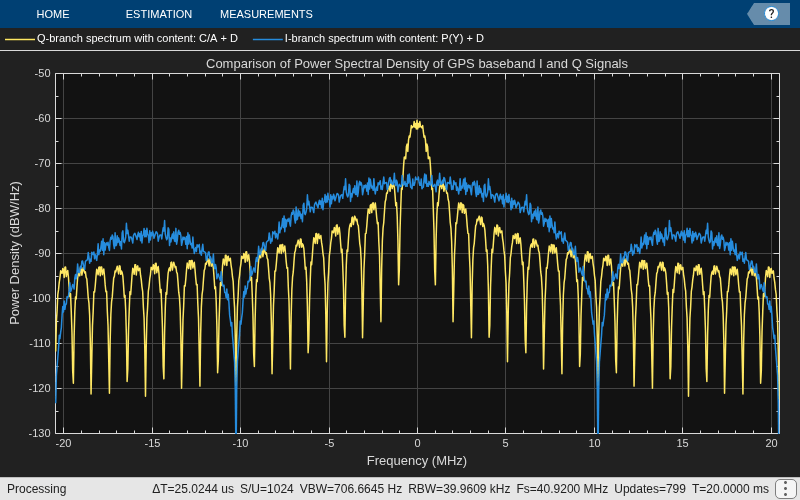
GPS Waveform Generation
Generate a complex baseband GPS waveform.
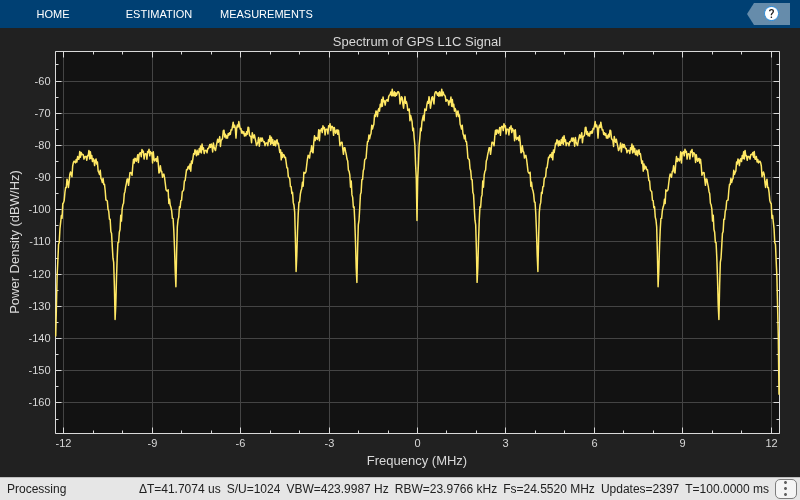
GPS L1C Waveform Generation
Generate a GPS L1C waveform.
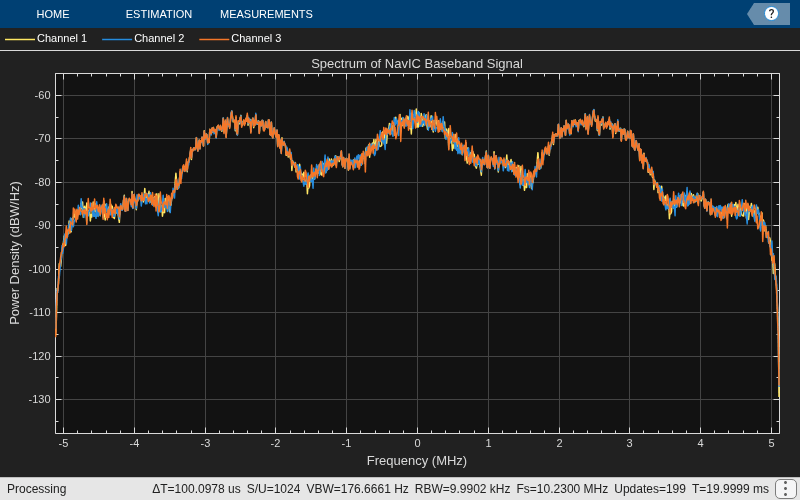
NavIC Waveform Generation
Generate NavIC SPS data and complex baseband NavIC waveform.
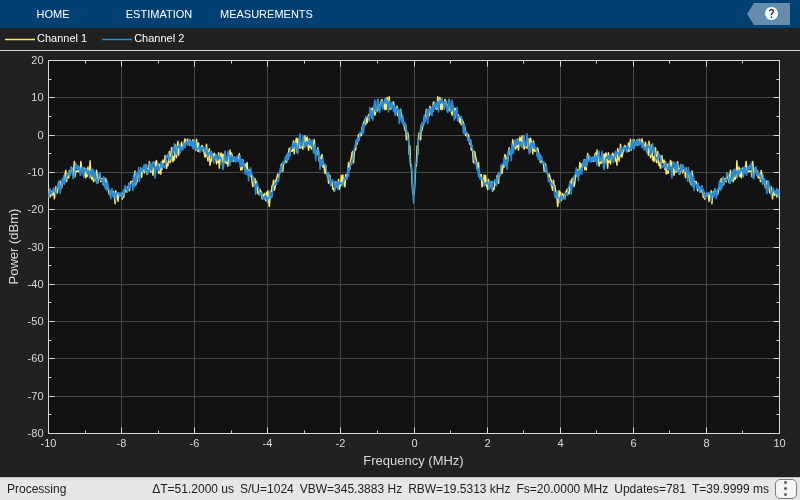
Galileo Waveform Generation
Generate Galileo F/NAV and I/NAV data, ranging codes, and E1/E5 complex baseband waveforms.
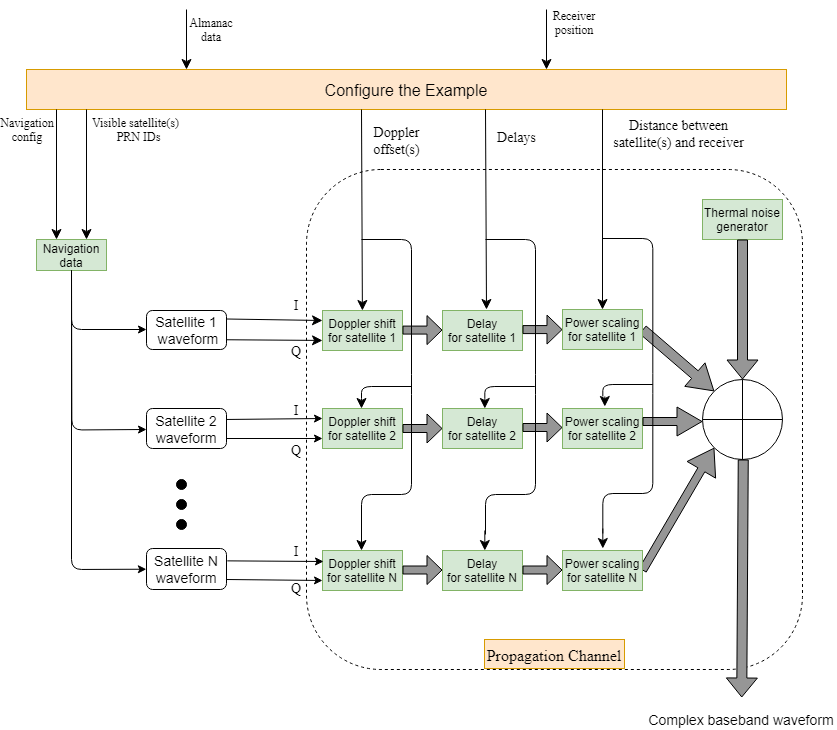
GNSS Signal Transmission Using Software-Defined Radio
Generate GNSS waveform and transmit it using SDR.

